
A fire NOC in Pune is issued in two stages: a provisional approval granted on your drawings, and a final approval granted after a physical inspection. Doors are examined at both. Most door-related objections come down to one thing — what was installed does not match what the provisional approval was given for.
This guide covers the Pune-specific route: which authority your building falls under, what happens at each stage, and the door details an inspector actually puts a hand on. For the state-wide picture, read our guide to fire NOC door requirements in Maharashtra.
At a glance
Provisional approval is granted on drawings. Final approval is granted after inspection, and the provisional recommendations are re-checked during that inspection.
Under Section 3(3) of the Maharashtra Fire Prevention and Life Safety Measures Act, 2006, the obligation does not end at the NOC — a maintenance certificate is due twice a year, in January and July.
First establish which authority your building falls under
Pune is not one jurisdiction. Before anything else, confirm who your Chief Fire Officer is, because the forms, the portal and the inspecting officer all change with it.
Section 2(7) of the Act defines a local authority as "a Municipal Corporation or a Municipal Council or a Nagar Panchayat or an Industrial Township". In practice that produces four separate routes around Pune:
- Within PMC limits — the Pune Municipal Corporation Fire Brigade, under its Chief Fire Officer.
- Within PCMC limits — the Pimpri Chinchwad Municipal Corporation fire department, covering Bhosari, Pimpri, Chinchwad, Nigdi and the surrounding belt.
- Outside both corporations, inside the metropolitan region — the Chief Fire Officer, PMRDA.
- Inside a notified MIDC industrial area — applications are forwarded to the Divisional Fire Officer, MIDC of that region, not to the corporation.
Getting this wrong costs weeks. A plot in Chakan or Ranjangaon is an MIDC matter even though the postal address says Pune, and a building just outside the PCMC boundary is a PMRDA matter even though the site is surrounded by PCMC infrastructure. We cover the two corporation areas in more depth on our fire doors in Pune and fire doors in Pimpri Chinchwad pages.
Stage one: provisional fire approval
The provisional approval is granted on paper, before construction or fit-out. At this point your doors exist only as a specification — a rating, a location on the plan, a leaf configuration.
The Maharashtra Fire and Emergency Services portal lists what the submission carries: an application addressed to the Director on letterhead, architectural drawings, block plans, floor-wise area certificates, a note on building activities and fire protection measures, and the Fire Protection Fund fees receipt. The portal states that the provisional NOC is "issued within 7 working days after receipt of online payment UTR Number".
Two decisions made here bind you for the rest of the project. The first is the rating written against each opening. The second is whether the drawing says "fire door" or names a certified doorset. An inspector at final stage reads the drawing, not your intentions.
What the rating on the drawing has to be
The ratings come from the National Building Code of India 2016, Part 4. Its table of fire resistance ratings puts fire separation assemblies — the code calls them fire check doors — at 120 min, and fire enclosures of exits at 120 min, across all four types of construction.
Plant rooms are specified separately and more strictly. Clause 3.4.6.3.2 requires that transformers inside a building be dry type and that "all substation/switch room walls, ceiling, floor, opening including doors shall have a fire resistance rating of 120 min". Clause 3.4.9.2.2 requires a boiler to sit in a room rated 180 min, with entry "provided with a composite door of 120 min fire resistance rating".
If you are still deciding what goes where, our guide on choosing between FD60 and FD120 works through the logic opening by opening.
Stage two: final fire approval
The final application needs the drawings approved by the planning authority and a copy of the provisional NOC. A final inspection is then carried out, and the recommendations recorded on the provisional NOC are checked during it.
That sentence is the whole risk. The provisional approval is not a clearance you file away — it is the checklist you will be measured against months later, after the doors have been bought, delivered, installed and possibly substituted by a contractor looking to save money.
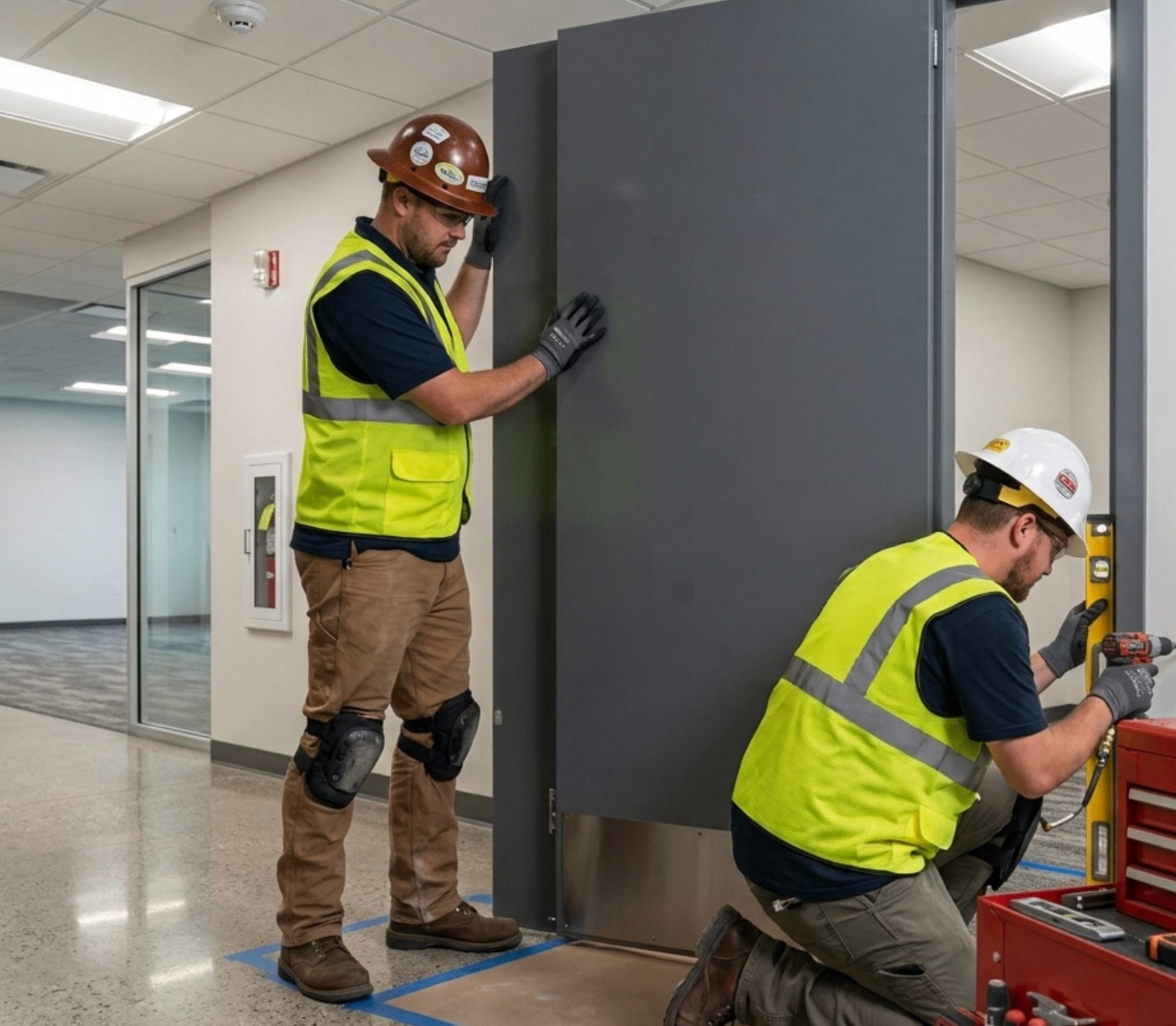
What the inspector checks on a door
The inspection is physical and quick. These are the points that generate objections.
The rating as installed matches the rating on the drawing
An FD60 leaf hung in an opening the drawing marks FD120 is an objection even if the door is certified, well made and correctly installed. Substitutions made on site during procurement are the most common cause.
Test evidence that covers this doorset
A certificate for a single-leaf door does not cover the double-leaf version, and a report on a door with no vision panel does not cover one with glazing cut into it. Our guide on reading a CBRI report, a BIS licence and an ISI mark explains what each document does and does not prove.
Gaps and clearances
Measured with a gauge at the head, jambs and threshold. A door that passes on paper fails here more often than anywhere else — the detail is covered in fire door gaps and clearances.
Hardware fitted and working
Hinges, closer, latch, and panic hardware where the exit route requires it. A door that does not close and latch on its own is not performing, whatever its certificate says. See fire door hardware under IS 3614:2021.
Seals present and continuous
Intumescent and smoke seals do different jobs and a certified doorset is tested with both in place. Breaks at the corners, or seals left out during installation, are visible to an inspector without tools.
Form A, Form B, Form D: which paper goes where
These are easily confused, and submitting the wrong one delays the file.
- Form A — issued by a licensed agency with annexure, submitted for final fire approval under the Act.
- Form B — issued by a licensed agency with annexure for existing premises, where there is no fresh construction approval to work from.
- Form D — the fire safety compliance certificate. PMC's fire department has told owners within its limits to obtain it from a licensed agency registered with the PMC Fire Department and submit it in duplicate at the Chief Fire Officer's office, Fire Prevention Centre, Modern Fire Station, New Timber Market, Pune 411040.
PMC's notice cites Section 265(1) of the Maharashtra Municipal Corporations Act and Section 9 of the fire legislation, and applies to high-rise residential buildings, cinema halls, multiplexes, educational institutions, hospitals, commercial complexes, malls, star hotels and other business establishments.
Only a licensed agency can issue these. Section 9 of the Act lets the Chief Fire Officer grant a licence to act as a Licensed Agency for one year at a time, renewable. Section 10(2) then bars any such agency from certifying compliance "without there being actual such compliance" — which is why an agency will refuse to sign for doors whose evidence does not match what is standing in the opening.
The twice-a-year obligation most owners miss
A fire NOC is not a one-time clearance. Section 3(3) requires the owner or occupier to furnish the Chief Fire Officer a compliance certificate from a licensed agency, and then "a certificate in the prescribed form, twice a year in the months of January and July regarding the maintenance of fire prevention and life safety measures in good repair and efficient condition".
For doors this means the closers, latches and seals have to still work in year three, not only on handover day. Buildings that sail through final inspection and fail a later audit usually fail on exactly these parts.
Wedging a fire door open is an offence, not a habit
Section 3(4) of the Act is short and absolute: "No person shall tamper with, alter, remove or cause any injury or damage to any fire prevention and life safety equipment installed in any such building or part thereof or instigate any other person to do so."
A fire door is that equipment. Removing a closer because it slams, wedging a stair door open for ventilation, or cutting a vision panel into a certified leaf after delivery all fall inside that wording. The alteration also voids the test evidence, so the building loses its paperwork and its protection in the same act.
A pre-inspection check worth running
Walk the building with the approved drawing in hand, a week before you call the inspection:
- Every opening marked on the drawing has a door of that rating — no substitutions, no openings left bare.
- Each door's evidence covers its configuration — leaf count, glazing, size, hardware set.
- Every door closes and latches unaided from any open position, with no help from a hand.
- Seals are continuous around the full perimeter, including the corners.
- Nothing is wedged, tied, hooked or propped open anywhere in the building.
- Gaps are within tolerance at head, jambs and threshold.
Fixing an objection before the inspection costs a site visit. Fixing it afterwards costs a re-inspection and a place at the back of the queue.
Frequently asked questions
How long does a fire NOC take in Pune?
The Maharashtra Fire and Emergency Services portal states the provisional NOC is issued within 7 working days of the online payment UTR number being received. The final approval follows a physical inspection, so its timeline depends on the inspection date and on whether objections are raised. MIDC publishes its own timelines of 30 days for provisional and 15 days for final approval in its industrial areas.
Do I apply to PMC or PCMC?
By the location of the building, not the postal address. Buildings inside Pune Municipal Corporation limits go to PMC, buildings inside Pimpri Chinchwad Municipal Corporation limits go to PCMC, and plots inside a notified MIDC industrial area are handled by MIDC's Divisional Fire Officer. Confirm the boundary with the planning authority before filing.
What fire rating do staircase doors need?
NBC 2016 Part 4 rates fire enclosures of exits at 120 min across all four types of construction, and fire separation assemblies — fire check doors — at 120 min. Your approved drawing is the governing document for a specific building, so specify against it and confirm with the fire department where a building has unusual compartmentation.
Can I use a fire door that has a certificate but no test report for my exact size?
Only within the range the evidence covers. A test report applies to the doorset configuration tested — leaf count, maximum size, glazing, hardware. Ask the manufacturer which report covers the doorset you are buying and read its scope before the doors are made.
Is the fire NOC a one-time approval?
No. Section 3(3) of the Maharashtra Fire Prevention and Life Safety Measures Act, 2006 requires a maintenance certificate in the prescribed form twice a year, in January and July, confirming that the fire prevention and life safety measures remain in good repair and efficient condition.
Who is liable if the doors are non-compliant?
The owner or occupier. The Act places the duty to provide and maintain fire prevention and life safety measures on them, and PMC's own notice states that responsibility lies with property owners or users of the building. A contractor's assurance does not transfer that liability.
Sources: Maharashtra Fire and Emergency Services — E-Approval, the Maharashtra Fire Prevention and Life Safety Measures Act, 2006, and the National Building Code of India 2016, Part 4, published by BIS.
Valtrix manufactures IS 3614:2021 certified fire doorsets from FD30 to FD180 at Dhakambe, Dindori, Nashik, and supplies projects across Pune and Pimpri Chinchwad. See the full doorset range or the industries we supply.

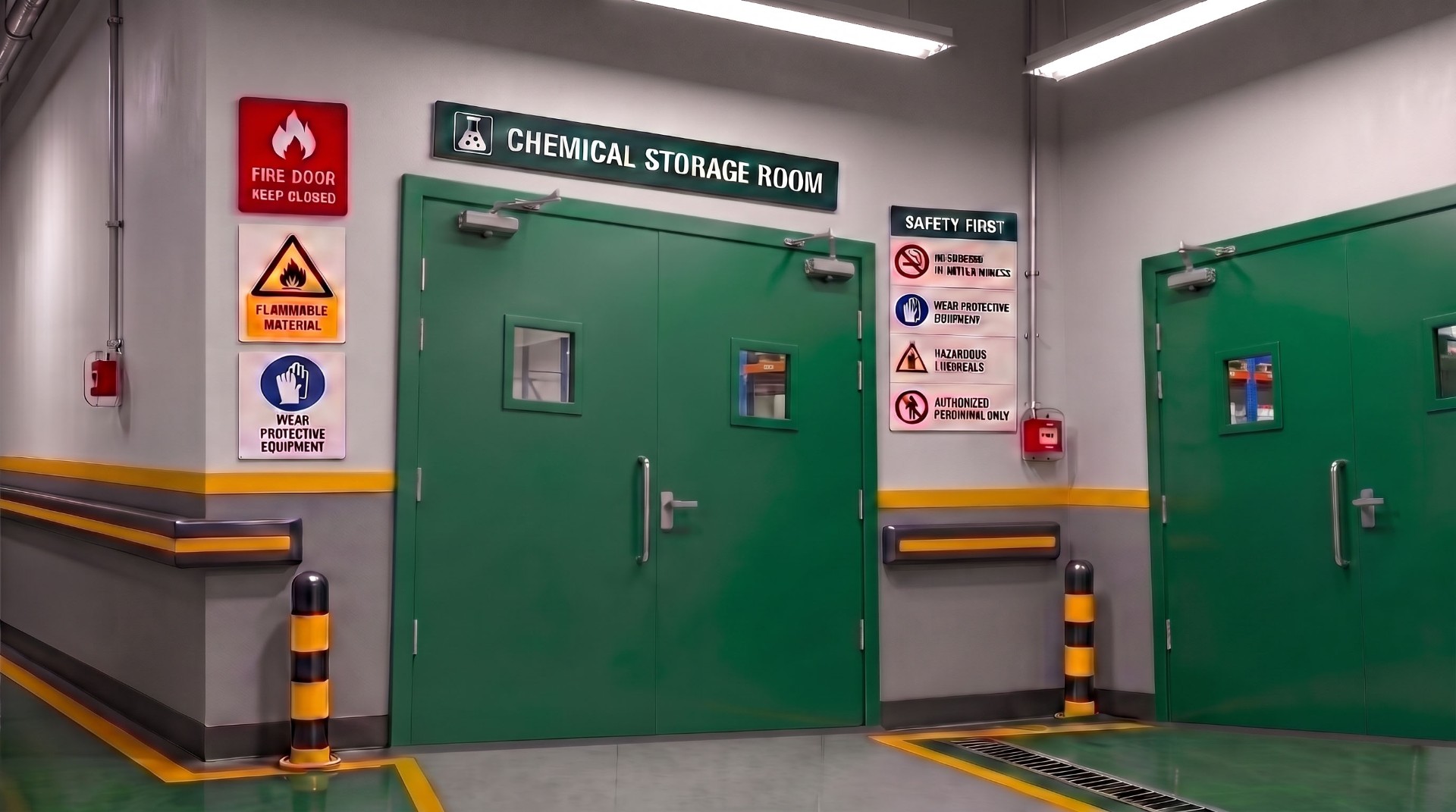 Fully InsulatedView Details →
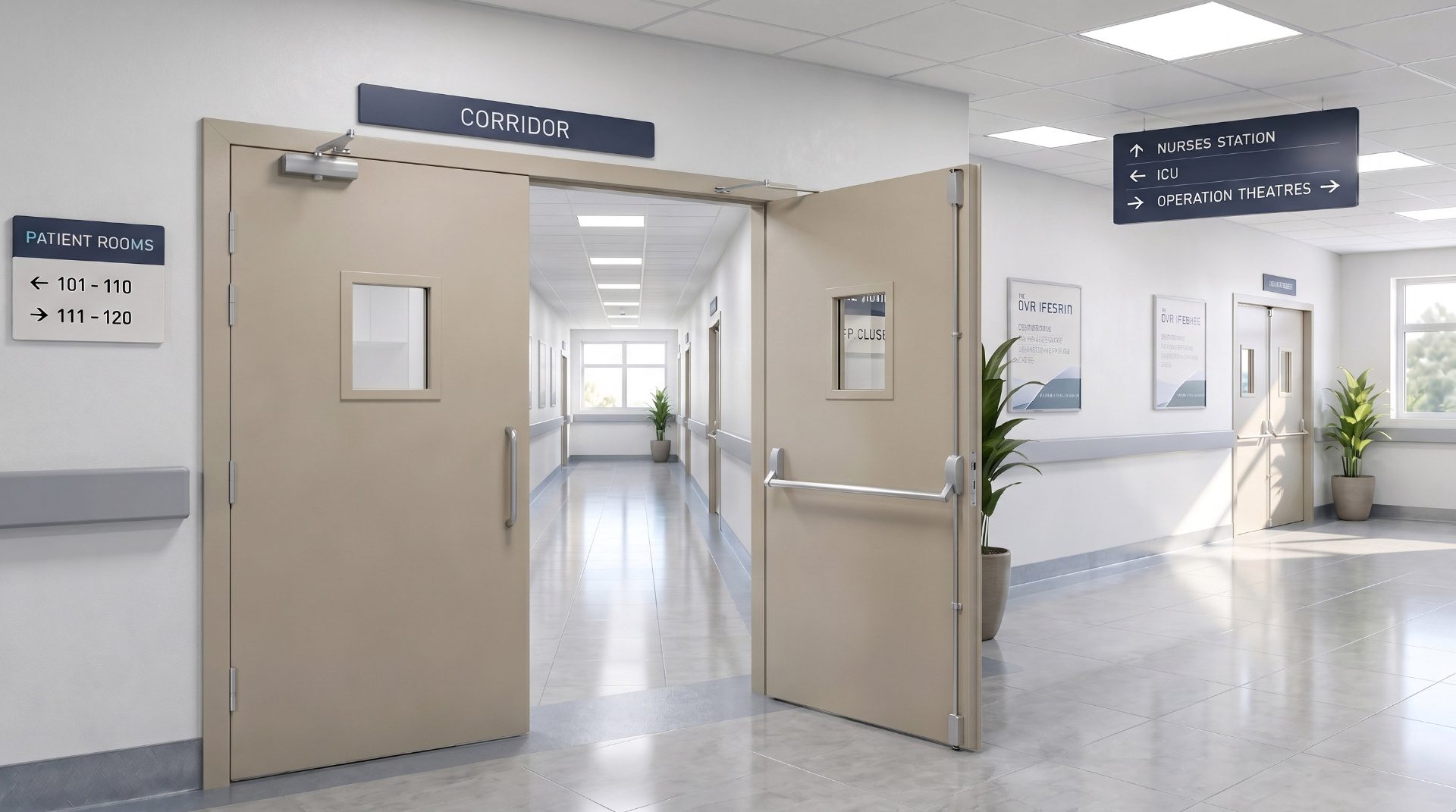 Partially InsulatedView Details →
 UninsulatedView Details →
 AcousticView Details →