
Across Indian suppliers, a certified fire door price commonly falls between roughly Rs 3,500 and Rs 12,000 per square metre. For a standard single-leaf 1000 x 2100 mm opening, that puts a doorset somewhere around Rs 8,000 to Rs 26,000 before hardware, installation and documentation. The band is wide, and the width is the whole point.
A fire door is a tested assembly, not a product off a shelf. The leaf, frame, seals and hardware are certified together to a fire resistance duration under IS 3614:2021. Change the rating, the core, the glazing or the hardware set and you have changed the product, not merely the price. Two suppliers can quote the same opening and land three times apart, and almost always the specification explains it rather than the supplier.
A note on the figures in this article. These are market ranges observed across Indian manufacturers and listings as of September 2026, published so that you have a reference point when a quote arrives. They are not a Valtrix price list. Rates move with steel prices, project quantity and specification, so for a project number ask for a line-item quote.
What fire doors cost in India, by construction
Indian manufacturers quote two ways. Per square metre is common for steel doorsets in project quantities; per piece is common for standard sizes and retail enquiries. Per square metre is the more useful basis for comparing quotes because it removes size from the comparison, provided both quotes cover the same scope.
- Uninsulated steel, Rs 3,500 to Rs 5,500 per sq m — utility rooms, service shafts and general separation
- Partially insulated steel, Rs 4,500 to Rs 7,000 per sq m — corridors and commercial separation
- Fully insulated steel, Rs 5,500 to Rs 9,000 per sq m — staircase enclosures, plant rooms and escape routes
- Timber and composite, Rs 6,000 to Rs 9,500 per sq m — hotels, offices and hospitals where the finish matters
- With vision panel or fire-rated glazing, Rs 7,000 to Rs 12,000 per sq m — corridors, wards and lobbies needing sightlines
- Acoustic fire doorset, Rs 9,000 to Rs 16,000 per sq m — guest rooms, auditoria and noise-sensitive areas
Two things to note before using those numbers. Glazing is priced by the panel, so a small vision panel and a half-height glazed leaf sit at opposite ends of that range. And these are doorset rates covering the leaf and frame; the hardware that makes the assembly compliant is usually quoted separately, and that is where quotes most often diverge.
The eight things that move the number
1. Fire rating
The single largest driver. Higher ratings require denser or thicker core material, heavier gauge steel, and hardware certified to the longer duration, so an FD120 assembly costs materially more than an FD30 in the same size. FD30 through FD180 are the ratings available under IS 3614:2021. Specifying a higher rating than the building actually requires is one of the commonest ways projects overspend, so match the rating to the location rather than to a general sense of caution.
2. Insulation class, not just the rating
This distinction is frequently missed at quotation stage, and it changes both price and suitability. An uninsulated door maintains integrity, holding back flame and smoke for its rated duration. A fully insulated door also limits heat transfer through the leaf, which matters on any route people have to walk past or through. Partially insulated sits between the two. Three doors, three prices, three different compliance outcomes. The differences between fire door types are worth understanding before comparing rates.
3. Core material and leaf construction
Rockwool, honeycomb and vermiculite-based boards behave differently under test, weigh differently and cost differently. Leaf thickness and steel gauge follow from the rating and the core. This is typically the largest single material line in the doorset.
4. Size, and whether it sits inside the tested range
Standard openings are cheapest because they are already covered by an existing test. A leaf larger than the tested specimen is not automatically certified at the same rating, and extending certification to a larger size is a different exercise from simply cutting bigger steel. Non-standard sizes therefore carry both a manufacturing premium and a documentation question. Ask which of the two applies to your opening.
5. Single or double leaf
A double-leaf doorset is not two single doors. It needs a meeting stile arrangement, an astragal, and on rated assemblies a sequence selector so the leaves close in the correct order. Per square metre, double leaf costs more than single.
6. Vision panels and fire-rated glazing
Fire-rated glass is expensive, and the permitted glazed area is limited by the rating. The glazing also has to be installed with the certified bead and gasket system. Substituting a cheaper glass or bead breaks the certification of the whole assembly, which is a poor way to save money on a life safety component.
7. The hardware set
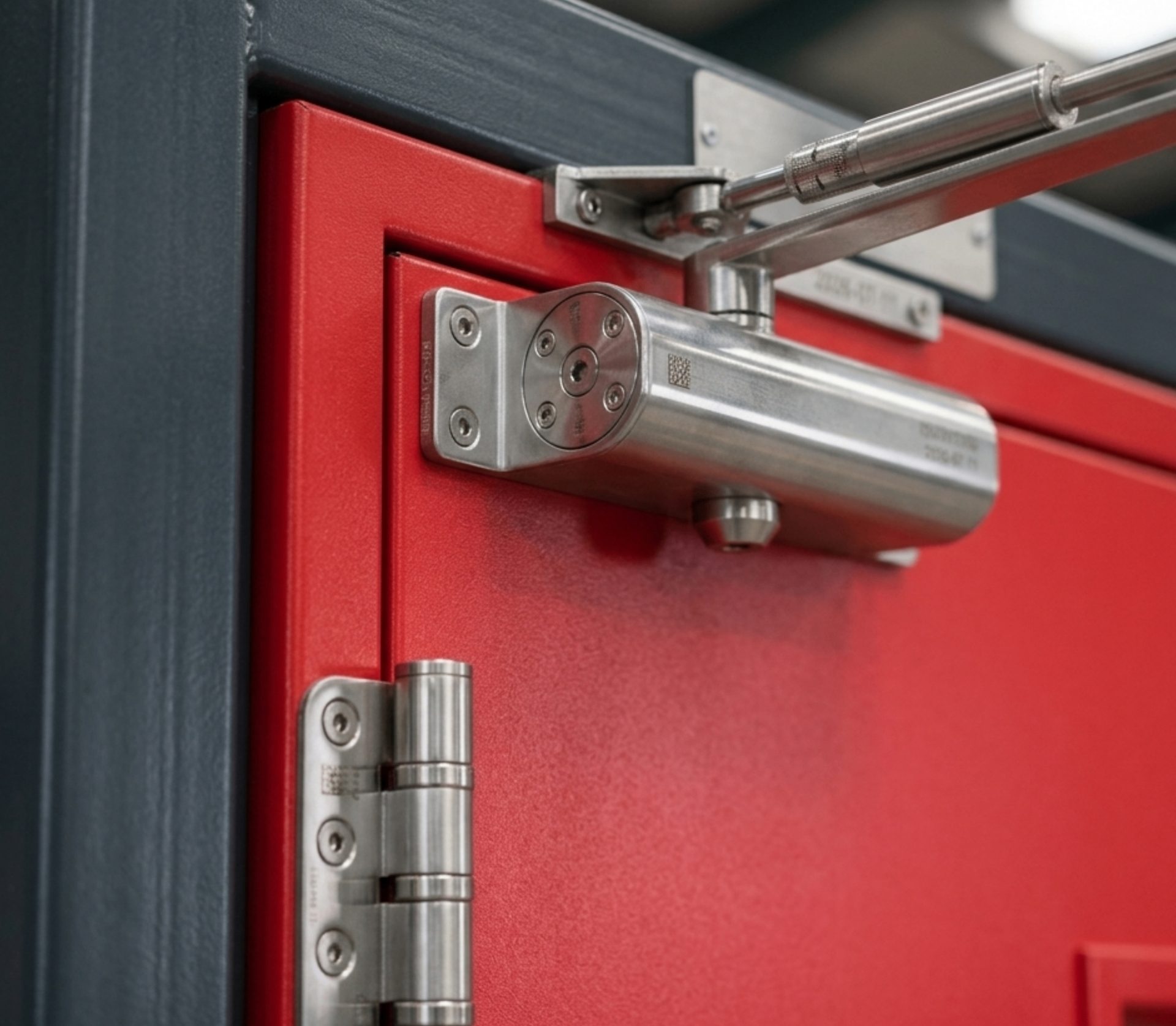
Hinges, a self-closing device, lock or lever set, panic hardware where egress requires it, intumescent strips and smoke seals. Every one of these has to be certified for use on a fire door. This is where a low quote most often hides, because a certified leaf hung on uncertified ironmongery is not a compliant fire door whatever the leaf was tested to.
8. Certification and documentation
Test reports, the letter of compliance, and the identification plate on the leaf. On a government, healthcare or data centre project these are not optional paperwork; they are what the inspection actually examines. A supplier who cannot produce them at handover has sold you a door, not a fire door.
What a low quote usually leaves out
When a number comes in well under the ranges above, it is rarely because the supplier is cheaper. It is usually because the scope is smaller. Before comparing two quotes, check that each one names the following.
- The fire rating, and whether it is integrity only or integrity plus insulation
- The frame, included or priced separately
- Intumescent strips and smoke seals, as separate line items
- The closer, lock or lever set, and panic hardware if the opening is on an escape route
- Vision panel and glazing, with the glass type stated
- Installation and grouting, or whether supply is ex-works
- The test certificate, letter of compliance and identification plate
- Whether the quoted size is within the tested range for that rating
A quote that itemises these can be compared against another. One that reads simply as fire door, 120 minutes, Rs X, cannot.
Budgeting fire doors into a project
Schedule the doors early. Fire doors are made to the opening and, where the size sits outside standard, may involve a documentation step. Ordering them late in the programme is how projects end up accepting whatever is available rather than what was specified.
Price by location, not by average. A building does not need one rating throughout. Staircase enclosures, plant rooms, basements and server rooms carry different requirements from internal office separation, and a door schedule that maps rating to location will cost less than a blanket specification applied everywhere.
Count the hardware inside the budget line. The most common overrun on fire doors is not the leaf. It is discovering at fit-out that every closer, seal and lever set on the schedule has to be certified, and that the allowance was made against a bare-door rate.
Frequently asked questions
How much does a fire door cost in India?
Certified fire doors are commonly quoted between roughly Rs 3,500 and Rs 12,000 per square metre depending on construction, rating and glazing. For a standard single-leaf 1000 x 2100 mm opening, about 2.1 sq m, that works out to roughly Rs 8,000 to Rs 26,000 for the doorset before hardware, installation and documentation. Acoustic and heavily glazed assemblies sit above that band.
Why do fire door quotes vary so much for the same size?
Because a fire door is a certified assembly rather than a single product. An uninsulated FD60 leaf with basic hardware and a fully insulated FD120 doorset with certified hinges, closer, seals, a vision panel and full documentation are different products for the same opening. The specification explains the gap, not the supplier.
Is a fire rated door more expensive than a normal door?
Yes, substantially. The cost covers the core material, the certified frame, seals and hardware, and the testing and documentation behind them, none of which a standard door carries.
What is not included in a fire door price?
Quotes commonly exclude the door closer, lock or lever set, panic hardware, intumescent and smoke seals, the vision panel and glazing, the identification plate, installation and grouting, and the test certificate. Ask for a line-item quote so you can see which of these are in scope.
Is fire door price calculated per door or per square metre?
Both are used in India. Per square metre suits project quantities and is the better basis for comparing quotes because it removes size from the comparison, but only when both quotes cover the same hardware and documentation scope.
Does a higher fire rating always cost more?
Generally yes, because higher ratings need denser cores, heavier gauge steel and hardware certified to the longer duration. Specifying a higher rating than the building requires is a frequent source of avoidable cost.